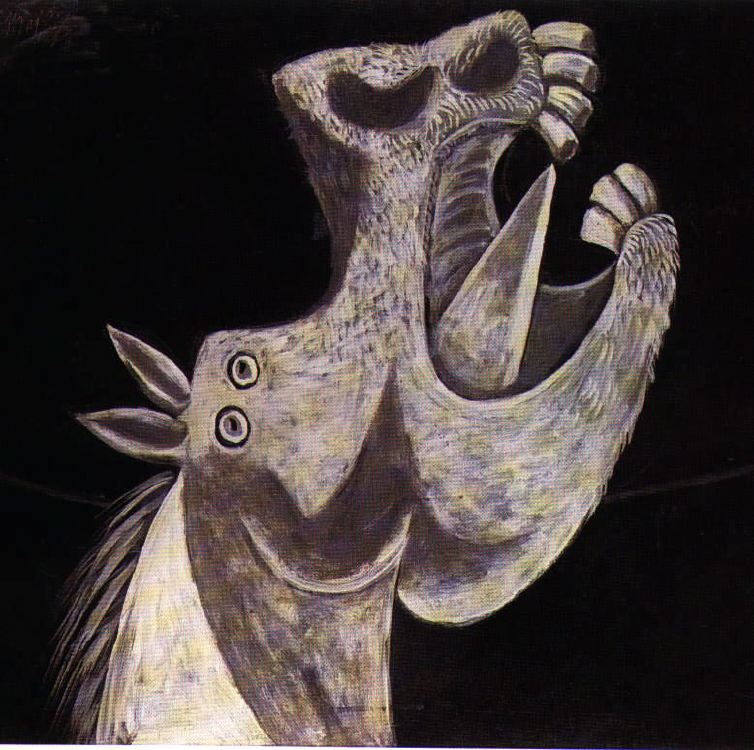
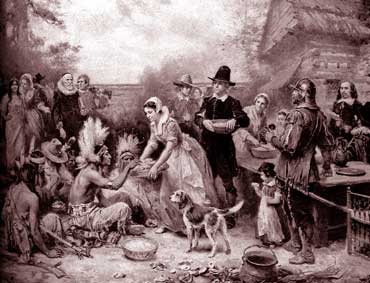
*The following is my revision of my non-traditional sonnet, “Lizards Wear Clothes.” I’m updating my Poetry Book for print and this piece seems relevant twenty years later, unfortunately.
The Emperor forgot to wear his clothes.
Constituents fell into clouds of Fools
when steaming golden leeks cooked in the pot
burned black. Heavy water boiled off sticky
temple tangled sentences with empty
words, while lowly interns kissed the Lizards
of crossly Knights. Monkey shouted, “Lizards
get some air and our leader back in cloth!”
Monkey gave up yelling at the empty-
headed lights, floating up the Yangtze. Fools
don’t sense danger as their brains are sticky
cells of grey glop. They smoke a lot of pot,
and anyway, the garden’s gone to pot.
Bunnies chewed the carrots and the Lizards
Back-o-gammoned, while the imps drove sticky
G-cars on a search for royal clothing.
In looking high and riding low, the Fools
spaced out and now the gas tank is empty.
The Naked Monarch screams, “Get me empty
land! We need to piss, Rum; Christ, where’s my pot?”
Last week, I attended NAMM2024 (National Association of Music Merchants) at the Anaheim Convention Center in Los Angeles with all its explosion of life and music blasting from the stages and booths of 1600+ exhibitors creating a papalooza of sound burgeoning into a riveting cacophony. Horns blowing, guitars shredding, keyboards symphonizing, and vocalists singing or rapping their hearts out to be heard over the ocean of sound. I loved being around so much music even if it was all at once, so alive. I went because I could and because I wanted to be in the room for Mike Lawson’s presentation, “Deconstructing Steely Dan: The Roger Nichols Methods”. Being in a large standing-room-only of people excitedly clapping to Mike’s poignant exploration into the genius of Roger and his integral role in the success of Steely Dan as well as his part in pioneering digital recording was all the reward I needed for the trip but the show had more to give me.
My life continues to be a circuitous journey of synchronicity after synchronicity, especially about bumping into people, famous or otherwise. Like all the times I bumped into Bob Dylan backstage and in the studio, yet somehow never really met him. But who really meets Bob? Then Donald Fagan bought Dylan’s house in Woodstock… Various politicians, no one took pictures, selfies or otherwise, back then. In my circle then and even sometimes now, it’s considered gauche. Okay, tacky.
Then there were times with Stevie Wonder. Once (of many) I was sitting in a chair in the lounge at Soundworks, NY waiting for Roger to finish when Stevie walked in and stood over me in a huge fur with braids flowing, looking every inch like the lion of sound that he is. (The same thing happened with Frank Sinatra, only I nearly feinted from the shock of being next to him.)
But this year at NAMM an entourage leading a blind guy to the down escalator nearly bumped into me as I was trying to get off. I have a gimpy leg, so I am very careful these days and since I was alone, I was paying more attention to not falling as I stumbled around this glob of people.
Cut to later as I’m cruising the Main Hall, I see a crowd and there he is: Stevie. Many that consistently go to NAMM know that Stevie usually shows up somewhere. He’s hard to miss with the crowd around him. He was not looking the lion-part and I wouldn’t have even recognized him if I’d looked up during the “almost bump” getting off the escalator.
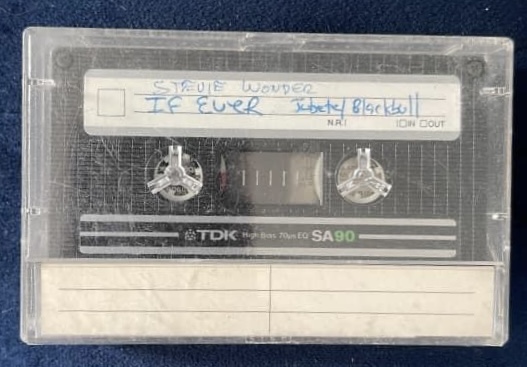
Unfortunately, a hitchhiker at NAMM called COVID jumped on me and while convalescing at home I looked at Facebook way too much. A thread on a John Denver Fan Club site caught my eye. There is already a lot out there about why didn’t We Are The World organizers invite John? (Which was very ugly of the organizers.) But then someone posted that Stevie felt sorry for John being left out and sent him the demo of a new song, If Ever, for John’s last album on RCA, Dreamland Express.
The part of the story that I know is that engineer Daniel Lazerus was doing something with Stevie and Roger Nichols (my husband and producer of the project) asked Lazerus to ask Stevie IF he had any new songs appropriate for John. He did! John recorded it. If Ever wasn’t a hit, but it happened. John loved that Stevie gave him the song and especially loved that he played harp on the track.
And here it is: Stevie’s cassette demo forty years later. Another one from my dusty desk that ended up in a special box that survived after so many moves, so many that I’ve lost count…like Steely Dan’s Second Arrangement.
IF I ever get to be in the same room with Stevie again, I will wipe off all the germs and happily hand him back his cassette.
I believe every square inch of our planet is sacred ground but the fire obliterating Lahaina 8/8 is beyond despair for my family and my Maui Ohana. All the lives lost, all the homes and businesses destroyed. Knowing we can’t go there ever again like it was.
Roger’s ashes are in Maui waters because that’s where we were most happy. After he died, I lived alone on Maui for 10 years with our dog, Charlie, and my heart eventually started beating again with the immensity of Aloha i.e. Love around me.
Donate. Give Aloha. All we have is each other. In the end that’s all that matters. Maui will rise from these ashes. But Lahaina is forever changed. It was always a hallowed ground for the Native Hawaiians, but after this, it is even more sacred with the souls who died in this fire and so many others’ dreams—all in the ashes. 😢
Maui No ka Oi 🌅
Photo taken by Dave Russell 🎶 Roger and me at Lahaina Sound during the China Crisis Project produced by Walter Becker. My vocal credit on the album is Connie Reed. Come on, guys! 🙄
Me at Maluaka Beach wondering why Native Peoples are so wronged on this planet. Why Roger was treated so badly by people he gave his life’s work for? Why can’t we end a sentence with a preposition? Sigh.
Charlie did not like the 5 hours in cargo to get to Kahului. Such a good boy ❤️
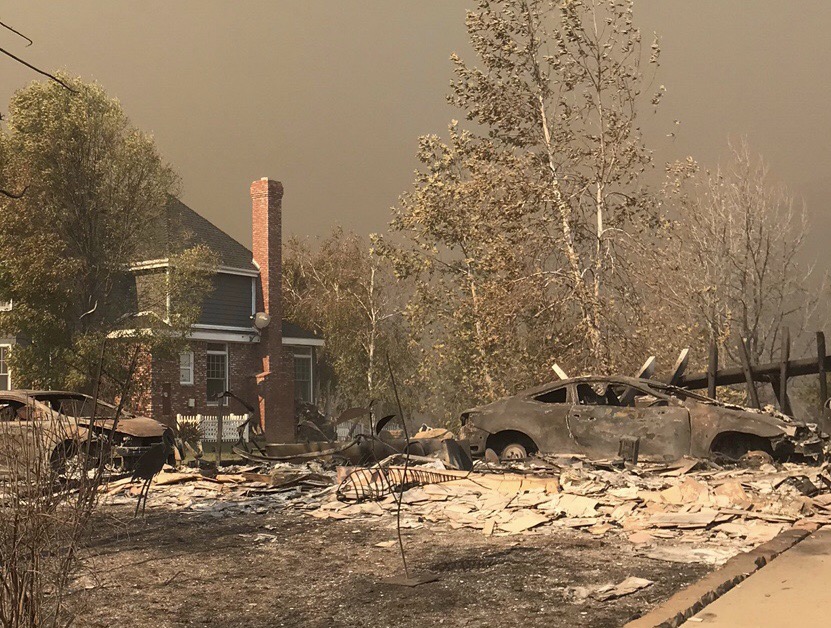
5 a.m. 13 Dec 2017. At night, I can really see the flames—ominous, chewing away, melting everything in its path. A spiraling flare of tremendous red that looks big from where I sit miles away means large things are burning, big trees, maybe big buildings, maybe oil business paraphernalia and then comes the black smoke, which contains the particles of a hotter fire that’s extinguished items of purpose, now some new old purpose.
The fire keeping me awake this dark morning is on the peak of a mountain ridge across the Upper Ojai Valley in Southern California from where I sit on a deck that didn’t burn in the fire when it came through here. This valley, my valley on a plateau that stretches between Ojai Town and Santa Paula for about ten miles is burned through, so they say, although earlier this night a house across the road that survived the #thomasfire caught fire when the electricity was restored. Seems to me the fire gods are having their own say. Little pockets of smoke reveal fires in our yard and all over the hills from roots slowly burning which may take weeks. Some smoldering fires are oil seeps, a local item that springs up along fractures in the earth in this part of the world and they may burn a long, long time.
There are many big fires still burning all over Southern California: Thomas, Skirball, Sylmar, Lilac, probably more. Without TV or reliable Internet, it’s hard to keep up. No rain for months coupled with 70mph Santa Ana winds lit up the sky around me nine days ago and with little warning, Eric and I with our precious dog, Rocco, drove away fast with flames all around.
The #thomasfire, my fire, burned up and spewed out everything around my abode: cars (my car), homes, ancient oaks, animals trapped in barns (not my animals), trailers, garages, fences, pictures, tools, golf clubs, books, family heirlooms, family Christmas ornaments…the animals trapped in barns haunt me in my sleep.
But by some miracle the house did not burn. But why not? Not one window broke in this wood Victorian, including the fireplace logs leaning against the house. Maybe the recently watered grass and trees that surround the house, maybe the wind changed or maybe the fire gods didn’t need it on their march, doing what they do, burn, burn, burn.
The irony is we create our own disasters by doing what we do, building things where fires have always burned, but where on the planet is there not Nature calamities for human-born projects? Flood, tornadoes, hurricanes…btw Nature runs things on this rock, in case we all forgot. We are merely allowed to reside in the beauty for a very brief span of time.
On this day many of my memories and the comforts of home for a lot of my neighbors now reside in piles of ash, totally unrecognizable from their previous state. The remarkable thing about humans is the desire to mold that dust back into some sort of tangible thing to hold or love whether it be a structure or a handmade quilt. This valley is so unique, so beautiful, I bet they’ll all rebuild. Maybe it’s easier for me, having already gone through the process of losing my home and precious belongings in some other disaster seven years ago. I survived and my life got better. And if old-timers know, I’m told the fires are done with me, for now. But I keep my mother’s quilt nearby just in case we need to run again.
6 a.m. Dawn. The rooster just crowed! I thought he was dead because of his silence these past nine days. I know it’s the one before the fire because he has a particular skrackle-doo. What a great morning! And anyway, I can’t see flames in the daylight.
Opportunists seeking to undermine the average citizens’ right to challenge environment damaging permits, tacked on an amendment to the much anticipated Everglades Bill HB813 in the final hour of the Legislature session that ended March 22, bypassing public debate and now awaiting the signature of Governor Bush.
The amendment sponsors, incoming Senate President Jim King and Rep. Gaston Cantens, R-Miami, argue, “If that person fishes in the water body to be altered by a permit… theywill have standing.” But environmental attorney, Tom Reese, who uses the specific statute under attack to enforce Florida’s environmental laws for Sierra Club and others, states “this legislation reverses 30 years of (a) citizen’s ‘standing’ right.”
Under the new guidelines only an environmental organization in existence a year with at least 25 members living in the county where the permit is being sought can challenge projects, leaving the language open to interpretation by the courts. For example, Reese notes that the bill refers to citizens. State law defines citizens as Florida residents or corporations, which could exclude corporations like the Sierra Club, incorporated in California.
Desperate, many environmentalists including, Eric Draper, Audubon’s director of conservation, lamented, “We can’t fund Everglades restoration and buy the land we need to buy without that bill”, with Audubon Vice President Charles Lee saying they’d worked to amend it to make it acceptable, since the bill doesn’t specifically prohibit a single ‘citizen’ from challenging permits.
However, a decade ago, environmentalists living in Sarasota County worried about the effect on the regional drinking water supply if the Consolidated Minerals mine went forward sucking out ‘this huge amount of groundwater,” according to David Guest, a lawyer who represented the group. They sued and blocked the mine. Although Guest doesn’t think Bush should veto the bill, because of its importance for the Everglades, even he admits “This bill would have foreclosed our participation.”
Rep. Cindy Lerner, D-Miami, one of 37 House members who voted against it reminds us all, “Public participation in the process is the cornerstone…of a democratic state.”
Sierra Club, Florida Consumer Action Network, 1000 Friends of Florida, Save the Manatee Club and 50 more groups join Attorney General Bob Butterworth in opposing the tarnished Everglades bill, and urge Governor Bush to veto the bill on his desk, call a special session of the Florida Legislature and remove the offending language.
The citizen’s of Florida deserve a bi-partisan bill eagerly awaited by all working to save what’s left of this country’s only sub-tropical kingdom and allow the state to sell bonds to pay for its share of cleansing the Everglades without any erosion of civil rights or gifts to special interests.
Article appeared on the Sierra Club Florida Chapter Website March 2002.
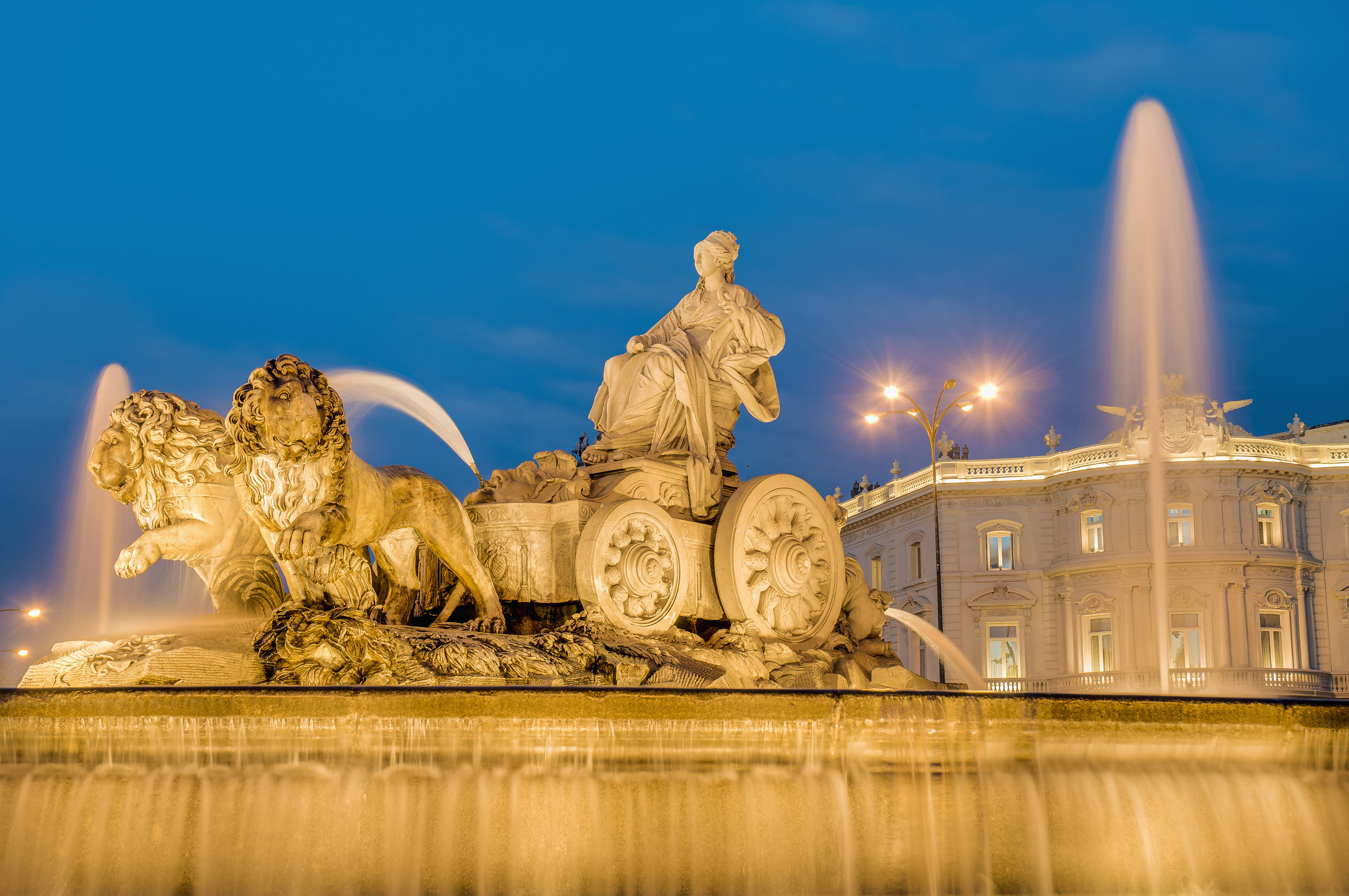
(Being in Mexico, all things Spanish bubbled back into my brain. The following is a paper I wrote for my MFA from the University of New Orleans’ “Spanish Literature and Culture Class” taught by Peter Thompson in Madrid July, 2007, oh, and yes, I lived right around the corner from the Plaza de Cibeles.)
In 1974, I portrayed Antonia, the niece of Don Quixote at my college production of Man of La Mancha for Austin Peay State University in Clarksville, TN–my big break–the moment I fell in love with theater. Little did I know then that I would spend quality time in Spain 30 years later thinking/writing about Miguel de Cervantes and other Spanish writers–all things España, especially about how women have been portrayed in stories.
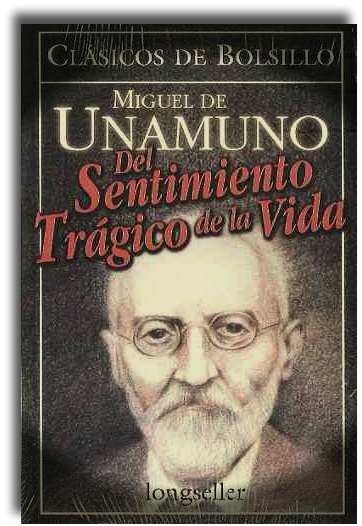
Miguel de Unamuno (1864 – 1936), a Spanish philosopher and important literary figure, proposed that, in his time, the women of Spain lived only to give birth, but he believed “that the role of woman is what has made the United States great” (Sedwick 312), especially as it applied to the liberation of women in the workforce and in education, but the women in his stories are preoccupied with motherhood as their basic motivation, and “a woman is either a mother or a potential mother, as distinguished from female, hembra, a term which Unamuno seldom uses without disdain” (Sedwick 309). In life, Unamumo’s wife, Concha, was a simple, un-intellectual woman and gave him eight children–so the discussion at home about the changing role of Spanish women ended at the tip of Unamuno’s pen.
Spaniards say they are Catholic, but since the death of Franco (1975) attendance to mass has diminished. In post-Franco Spain, how does a 21st century woman assimilate into a secularizing society with a government sanctioned 4th century Catholic dogma? The mixed message is one that is being played out in the cultures of many nations of the world to varying degrees, but Spain offers a unique story all its own.
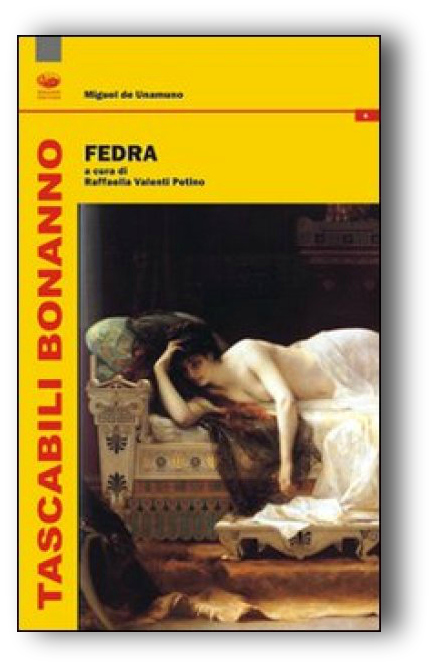
The arena of theatre and/or literature offers clues. Unamuno’s Fedra follows the basic premise of the Greek mythical story told in Euripides´ Hippolytus – retold as Phaedra in the 1st century C.E. by the Spaniard from Cordoba, Seneca, and in the 17th century by the French dramatist, Racíne.
The doomed Fedra/Phaedra falls in love with her stepson, but Unamuno changes one important detail. Unamuno’s Fedra “has no children of her own” (Sedwick 310), unlike the fertile Phaedra of ancient myth. Unamuno constructed a drama in which “tragedy for anyone other than Fedra is averted when she dies of love, remorse, and a physically weak heart” (Sedwick 310). His story seems to say that a woman without children is more likely to be a victim of destructive passion.
The production of Fedra at the Mérida Festival Teatro Clásico (2007), however, stayed truer to the original myth. The playwright, Juan Mayorga, included Fedra’s son, Acamante, but this Fedra ended the story by finishing off the dying Hippolytus with a knife, and then sliced her wrist, falling on the dead Hippolytus. The following video is a glimpse of the intense drama from my peanut-gallery seat.
This updated Fedra text is written primarily to showcase the talents of the singer Ana Belén, but even so, Belén’s Fedra is a mother, albeit a repulsive mother who commits three hideous sins damned in most religions; she lusts for her step-son, she lies, and then commits suicide. It would seem being a mother does not prevent this Fedra from being the catalyst of these horrific events. The mother as whore turns Unamuno’s concept of motherhood upside down.
Benito Pérez Galdós (1843 – 1920)creates a world where women are the victims of their fecundity or lack thereof. In Fortunata y Jacinta, the women, respectively mistress and wife, fight over a man – Juanito. The mistress is fertile and the wife is barren. Fortunata has one clear idea: “A wife that doesn’t give children isn’t worth a thing. Without us, the ones that have them, the world would come to an end” (Galdós 603).
Unfortunately for Fortunata her childbearing prowess does not save her body and she dies, leaving her son for Juanito and his wife, Jacinta, to raise. The mother in this story is not socially or morally elevated by her ability to give birth–a precursor of the fully mixed message to come.
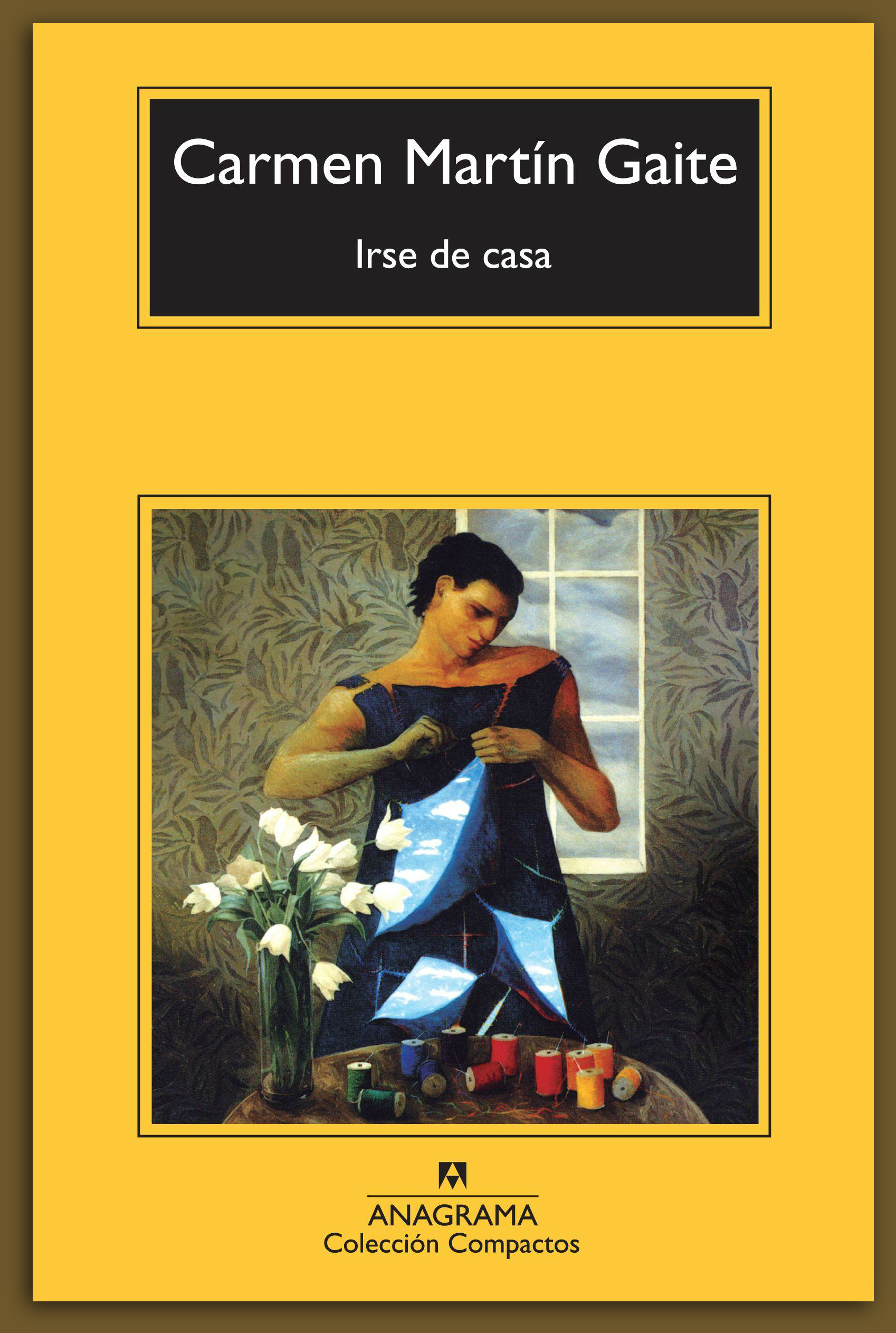
Spanish women eventually found their own voice to express their slant on motherhood. Some critics feel Carmen Martín Gaite (1925 – 2000) represents the best of the post-dictatorship trend in the writing of Spanish female authors who polarize the Spanish male into characters of “macho” and “the weakling” (Brown 59). Gaite was mostly concerned with “the centrality of a problematic of communication” (Servodidio 565). The issue of motherhood would not be the over-riding issue, once men and women communicated, and not just dialogued. In other words, the way to a woman’s heart and body is through her head, and not the promise of motherhood.
In Gaite’s Fragmentos de interior the handsome Diego abandons his artistic wife of three decades to take up with young lovers to assert his virility. Gaite herself had two children, and also had separated from her writer husband, Rafael Sanchez Ferlosio. Art reflects life.
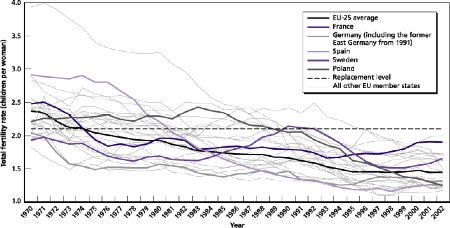
In the real world, the women of Spain are taking charge of their bodies anyway, with or without the sanction of Unanumo or the Catholic Church. Spanish women are forging a new story about motherhood. Post-Franco women are having fewer children. The Franco regime banned contraception and encouraged large families, but the subsequent administrations have had no explicit population policy. The following graph from the Rand Corporation shows how Spain plunged in birth rates after the Franco dictatorship ended.
In addition, Franco’s not-so-silent partner, the Catholic Church, has lost some authority in dictating how people live. Some blame gay marriage passed into law in 2005 which produces rebuttals like this. Predictably, the Catholic Church attacks the law, but gay marriages only represent 2% of total marriages (Grant), so how can fewer children be blamed on gays?
For the first time in Catholic Spanish history, women are gaining some control over their lives that women in Western countries have already achieved. For example, the sale and advertising of contraceptives was decriminalized in 1978, the establishment of divorce happened in 1981, and abortion has been allowed in some circumstances since 1985 (Valiente 288). Separating women’s reproductive choices from the auspices of the Catholic Church, a policy that forced multiple and unwanted pregnancies on women, was an important step in viewing motherhood as a choice rather than inevitability.
A woman’s choice of motherhood is at the very center of the battle for the soul of Catholic Spain. Why do Spanish women (and women in most industrial nations) choose not to have children? The reasons vary, but many are practical, not moral. The word on the street is that housing shortage is a problem. Joshua Edelman, a New York transplant of twenty-plus years, is married to a Basque woman and they live in Madrid. The only reason they have two children is because her pregnancy was twins. Edelman says, “There is a shortage of housing and high property tax.” And, because of the housing shortage, many young Spaniards live longer with their parents affecting the birth rate (Hooper 329).
In response to the sweeping changes, Madrid’s archbishop, Cardinal Antonio Maria Rouco Varela, recently announced, “Madrid has turned into Sodom and Gomorrah” (Richburg).The choice to use birth control clearly contradicts the Catholic edict and last July when Pope Benedict XVI visited Spain to respond to the legalization of gay marriage, he lumped contraception in with gay marriage, abortion, and human embryo research—the laundry list of sins Catholics must reject (Gonzalez), but the times they are a-changing. Also, when José Luis Rodriguez Zapatero, a member of the Socialist Workers’ Party, was elected in 2004, he “eased laws on abortion and divorce and refused to make religion classes mandatory in schools” (Dixon).
Lucía Extebarría (1966 – ) is part of the new generation of writers taking up the torch of feminine identity. Her first novel Amor, curiosidad, prozac y dudas (Love, Curiosity,Prozac and Doubts) deals with a variety of women’s issues: “discrimination in literary studies and academic recognition, sexual abuse, bulimia and anorexia” (Women 181). The women of Spain struggle with the same issues as women everywhere, but in Spain the long shadow of the Catholic church shrouds all.
In a PBS interview, Ms. Gímeno, a feminist attorney, sees a change coming. “They (Catholicism) are against divorce, abortion, stem cell research, euthanasia, gay marriage. With so many things that have been accepted by Spanish society, I think the church, or at least the church hierarchy, has lost contact with society” (Gonzalez). Given the chance, what thinking human being wouldn’t object to being polarized between a whore or virgin?
A century ago, Unamuno’s Fedre didn’t muddy the waters of holy motherhood. His Fedre was a barren woman–Unamuno’s device to explain the sinner’s motivation behind the debauchery. Half a century later Richard Wright reported, “All women alone (in Spain) are whores” (Wright 84). Now a century later, women not only stay single longer, but many choose to educate themselves and postpone marriage and child-rearing.
Ms. Gaite expresses in the late 20th century the desire women have of wanting to be treated as human beings first–wives and mothers next. “Ironically, it would seem that the longer Spanish men cling to traditional attitudes towards women, the greater the damage they will do to that most traditional of Spanish institutions, the family” (Hooper 133).
The Catholic Church stands to lose much of its value in society by condemning women for wanting to live richer, fuller lives. Ms. Gímeno speaks for many professional women: “I think if that (Catholic Church) keeps going like that, Spain will continue to be more secular, and the church will run the risk of ending up talking to practically no one” (Gonzales).
Writers like Extebarría are the tip of the iceberg. Women in Spain are issuing a “collective shout” for a whole generation: “we own our bodies.” In a land where Don Quixote is still revered as a national hero chasing his impossible windmill, a metaphor for the quest for spirit (Unamuno 314), the time is right for Doña Quixote to realize a dream of individuality and personal dignity that comes with owning one’s life and choices, a spiritual quest for women not wanting to be condemned for choosing to have few or no children.
The struggle for identity is a theme that runs through the work of Ms. Gaite who writes to an audience of women that on the one hand don’t join feminist organizations in large numbers, but on the other, “seem to positively value the achievements of the movement” (Women 182). For inspiration, women need look no further than the Great Earth Mother, Cybele, who is riding with her lions in the Plaza de Cibeles (Madrid), leading the way for women and the men who support them on the greatest quest of all: personal freedom.
Works Cited
Brown, Joan. “Men by Women in the Contemporary Spanish Novel.” Hispanic Review, U Penn. P.: Vol. 60, No. 1. (Winter, 1992), pp. 55-70. jstor.org
Dixon, Nancy. “Did Richard Wright Get It Wrong? A Spanish Look at Pagan Spain.” Mississippi Quarterly: The Journal of Southern Cultures 61.4 (2008): 581-591.
Galdós Pérez, Benito. Fortunata and Jacinta: Two Stories of Married Women. London: Penguin, 1988. Print.
Grant, Jonathan, Stijn Hoorens, Suja Sivadasan et al. “Population Implosion? Fertility and Policy Responses in the European Union.” Low Fertility and Population Ageing: Causes, Consequences, and Policy Options. Rand Europe: 2005. http://www.rand.org/
Gonzalez, Saul. “Religion and Ethics News Weekly.” 7 July 2006. Video. http://www.pbs.org/
Hooper, John. The New Spaniard. London: Penguin, 2006. Print.
Richburg, Keith. “Church’s Influence Waning in Once Fervently Catholic Spain.” Washington Post Foreign Service: 11 April 2005, pA15. http://www.washingtonpost.com/
Sedwick, Frank. “Unamuno and Womanhood: His Theater.” Hispania: Vol. 43, No. 3. Sep 1960, pp. 309 – 313. http://jstor.org.
Servodidio, Mirella. “Dialogo e conversazione nella narrativa di Carmen Martín Gaite by Maria Vittoria Calvi.” Hispania, Vol. 75, No. 3. (Sept 1992), pp. 564-566. http://www.jstor.org/stable/344112 (Hispania is currently published by American Association of Teachers of Spanish and Portuguese.)
Unamuno, Miguel De. Tragic Sense of Life. New York: Dover, 1954. Print.
Women in Contemporary Culture: Roles and identities in France and Spain. ed. Lesley Twomey. Intellect Ltd:Bristol, UK 2003. Print
Wright, Richard. Pagan Spain. New York: HarperPerennial, 1995. Print.
I speak for dead people—some with real historical lives that can be read about in books and some who only live in my head, but I hear them speak. Just because people are dead doesn’t mean they never existed. Just because people are dead doesn’t mean they don’t have a story.
The challenge for this writer is to portray these people as authentically as possible, a daunting challenge at best. Sometimes the facts of their story have been written down, at least some of the facts. As any writer or reader knows, sometimes there are big holes in the facts of someone’s story. How they thought and felt is another matter. Even writing what I think and feel about my own life can be a mission sometimes, at least in a way that others will feel compelled to read it. Throughout history, I bet people who journaled felt the same pressure, at least the ones hoping to publish–very tricky this stuff of portraying a story, anybody’s story. And what about the one’s who didn’t journal? Who speaks for them, especially when someone else tells their story and gets even the facts wrong?
How can I explain my need to write the words of the dead? The Trickster enters into my stomach (through a process I don’t entirely understand) and creates this “havoc” or a “gut feeling,” and away I go. I start hearing dead people talk. Dead does not mean silent, as long as there is someone to hear them and type down what they say (I hardly write anymore, my hand hurts). So, I hear it, and I type it. Whether or not the dead are happy about this, I have no idea. They haven’t said one way or the other, but they keep talking, and as long as they’re talking, I’ll keep listening, and typing, speaking for the dead, as best I can.
Then there’s music, I hear that, too. But that’s another story…
Green (my addition) Dragon from the 13th century Southern Song Dynasty.
Trickster, is that you?
And Happy Birthday to my daughter Ashlee! What a story she will tell…
Hey you,
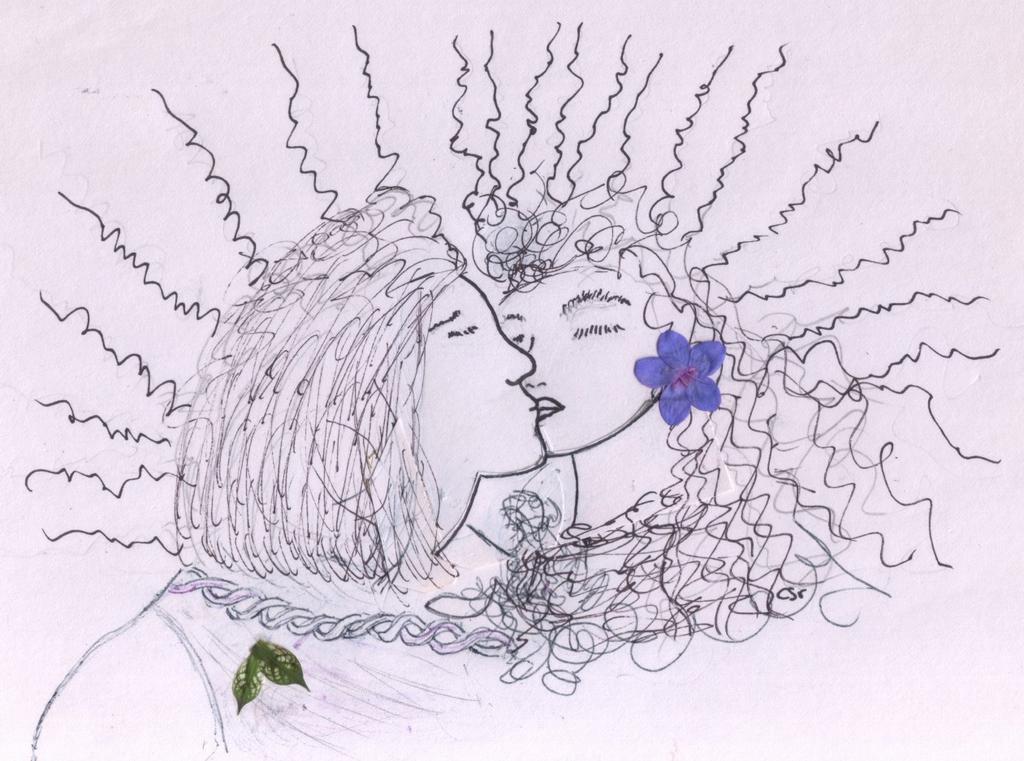
I send you kisses.
I send you my mouth –
full of a fine dry Italian wine.
The oak perfume lingers
around our lips touching,
while tongues search
soft insides of petals and stems.
I send you the heavy air from my lungs,
full of bright red blood,
as I write dull black lines
on a scrap of tree that will never
be seen by your epic eyes.
The pregnant air hangs all around with our dreams,
and our potent idea of two people locked arm in arm:
in that moment – safe,
in that moment – alive.
Hey you, I send you kisses,
and a piece of tile washed back to me
from the windswept sea. This piece
of clay, only less than the life we knew,
now holds my hand, and on an occasion such as this,
I almost hear the buried sound of you saying,
‘Hey you, there you are…’
DETERMINING THE NATUREof an ecstatic experience during the ritual of any mystical religion seems subjective and unreachable. But some common parallels in these rituals do exist with a broad stroke.
and lived years in Miami, NYC and New Orleans, cities with large numbers of Afro-Caribbean people. I’ve also been exposed to some of the Santería/Vodoun rituals and icons, but I cannot speak in the first person about Santería possession or trance. However, credible authors such as Maya Deren and Joseph Murphy shared their close experiences with possession, providing a small window.
7 African Powers
Are metaphysical encounters, ritualistic or otherwise, merely the by-product of brain synopsis or is there a region outside of our solid awareness, a dimension that our bodily senses cannot easily detect, and could this region be shared by all humans, a realm in which any person from any race or ethnicity can access under the right circumstances?
The religion of Santería or the way of the saints, also called Regla de Ocha, was constructed by West African priests/priestesses kidnapped by slavers, since among many other similarities, the liturgical language is a dialect of Yoruba or Lucumí, a language of West Africa, specifically Nigeria. (1) In the Caribbean, the African religion hid behind the saints inside the Catholic Church foisted on the slaves. Enslaved Africans noted the similarities of their native gods or orishas from their African homeland with that of the Catholic Saints.
The orishas were paired (hidden) behind their Catholic counterparts. Elegguá embodies St. Anthony — fate and justice; Orúla embodies St. Francis of Assisi — divination or wisdom; Changó or Shangó embodies St. Barbara — passion or power or thunder; and Oshún embodies Our Lady of Charity or Caridad (Cuba) — eros or love, marriage and gold. Each orisha is associated with its own color and number.
Oshún’s Altar
For example, Oshún’s color is yellow and responds to the number five (Murphy 43). Africans in slavery kept their Orishas alive in their hearts and minds, along with their ancestor rituals, which are seemingly the foundational rituals. According to one Santeria church, “if we stand tall it is because we stand on the shoulders of our ancestors and are reaching for the orishas.”
Joseph Campbell talks about a “fifth dimension” where people experience a bliss or “Earthly Paradise,” even though in the physical world this same blissful person may seem to another observer as “a squalid heathen in a shattered hut” (Deren xii). So, it is all about perception, once again: personal space or fifth dimension? (The vote is out as to whether there is even a 4th dimension, so beware of anyone with so-called facts.) And, where is this other, extra-dimensional space, next to our own or is it simply in our heads, in a room of our own personal space? Whether or not a god appears in this “fifth dimension,” incorporating separately from human consciousness, is entirely another, improvable matter to the scientific community that demands a tangible proof untenable to measure with current technology.
The other choices in this dithering around the sacred are the obvious sneers from the peanut gallery: drugs or hallucinogens. Yes, maybe some, but not all, not even close.
Recent research in the field of DNA genetics, specifically mtDNA, the mitochondrial DNA passed down through the mother, reveals what archaeology has failed to prove, that the human species most likely originated out of Africa, and our ancestral Eve lived around 150,000 years ago; “the oldest genetic lineages are found in people living in central and southern Africa” (Wells 40). If the bodily DNA of all humanity is the same, why wouldn’t the unconscious realm be similar, as well?
HulaKahiko (ancient style)
Trance-like ceremonies happen all over the world in all types of religions. In Hawaii the ecstatic nature of the Fire Dance invokes the Volcano Goddess Pele to enter the body and give the dancer or chanter strength, energy and creative ideas. Participants of Pele fire rituals experience a “fullness of knowing that the gods of Hawai’i are never so far off that we cannot see their faces, or hear their thoughts, or feel their breath on our necks” (Tangaro xxiv).
One of the biggest exports of India is their culture of possession by Shakti — a snaky Goddess of energy that invades or revives the body, depending on the slant.
Kundalini Energy
Shakti theoretically awakens the sleeping energy of kundalini, a corporal energy situated at the base of the spine, which then enlivens the chakras (energy points) placed at various points along the spine/body and out the top of the head.
Meditation Kriyas
In Shakti chants, I have personally witnessed and experienced frenzied bodily movements (kriyas) where the body moves without a conscious effort on the part of the owner, real-life moments of an awareness that does not exist in the physical plane, but in some construct of mind or consciousness, the intangible arenas that are as real (to my mind) as the chair I’m sitting in.
In my own experience, I did not invite or expect an explosion in my stomach, which then traveled up through my spine and out the top of my head or the events that happened thereafter. When I spoke of these events to a swami at the ashram, I expected him to be surprised, as if this had never happened to anyone but me.
Instead, he casually explained it as a common occurrence or kriyas among people in the vicinity of a powerful guru, much like the loa jumping from one person to another — also, reminiscent of Deren’s story about “a man standing on the sidelines […] who keels over […] the loa can come like this, without warning, as a wind” (Deren 255). I wasn’t even in the ashram when my events or kriyas happened. I was reading a magazine article about this guru in the comfort of my home miles away.
Some of my genetic ancestors are from the Religious Society of Friends or Quakers. Derisively called Quakers, the word “quaker” is how outsiders described what the Friends did while meditating in silence, their way to personally receive the “indwelling Spirit of God” without the aid of a priest or ornamental ritual.
Shaker Dance
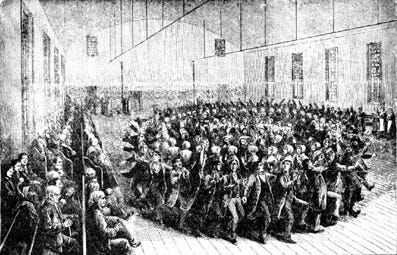
Considered devilish in 17th century England, the Quaker belief system incurred the wrath of the King, the Church of England and even The Puritans. (3) “Their intensity of focus sometimes resulted in involuntary physical quaking and weeping” (Larson 19). What these trancelike states have in common is that they are all altered-state experiences of the human mind — altered or theoretical, only in the sense that it is a mode of being that our current science cannot explain, or in some cases, even acknowledge as purposeful events.
The physical bodies and psyches are affected in all these rituals.
Since humans share a common ancestor, it seems plausible that our mental maps, wherever they lead, may also share some similarities in our journey of the mind.
A Santero priest
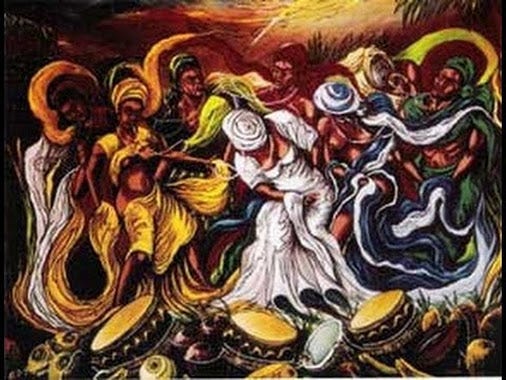
For those who practice Santeria, “the trance opens the doors to spirit possession, and the gods, or orishas, briefly enter the trance-induced body and use it for earthly advising” (Gage). A sensitive person involved in the ritual dance propelled by the drums willingly becomes possessed or “mounted” on an orisha who can then communicate to the group or answer questions. While in this state the person does not look like himself and talks with the authority of the orisha, (4)“the animating force of his physical body” (Deren 16).
The Haitians have a saying, “When the anthropologist arrives, the gods depart” (Deren xvii), much like the old saying “a watched pot doesn’t boil.” And even though a watched pot does boil, there is a question of how we measure the time it takes to boil and that leads to the woo-woo world in science called quantum mechanics. Quantum mechanics can offer a way to think of these in-between states of circling gods or pre-boiling water, curious events that seem to be affected by the attention, maybe even intention of our thoughts.
I lack the 15 years of mathematics needed to even approach quantum mechanics, a scientific theory that defies the usual rational explanation, but I am not alone in this quantum conundrum. Richard Feynman, a nuclear physicist, famously said, “No one knows why it is that way. That’s just the way it is” (qtd. Sagan 249). Quantum mechanics research shows through repeated experiments that light (and therefore matter) is neither a wave nor a particle until the collapse and this prequel arena, the waiting area for a temporal existence for the light or matter, is what physicists call a state of complementarity.
In his analysis of the relationship between quantum physics (mechanics) and psychology, C. G. Jung noted the synchronicity, especially in the two fields sharing this aspect of complementarity, comparing the unconscious state of the mind before action in the body to the prequel state for matter/light, that arena of neither/nor. In this state of complementarity “the consciousness is once more isolated in its subjectivity” (qtd. in Romanyshyn 32).
Consciousness is a certainty. Without consciousness, there are no thoughts available to imagine objects and then manifest them in the real world. An architectural draft created in the mind of an architect becomes manifested in the material world with the building of a skyscraper from the draft. We know we have a consciousness, but without tools to measure it in the scientific method, we have no way to prove its existence other than the fact that we know we are thinking, just as I must think the word before I type it. Not typing the word does not mean I didn’t think the word. The word existed as a thought whether or not it exists as a word on a page.
But how do we determine if our thoughts are our own or that of another entity’s thoughts? And how do we prove that thought entities or deities exist without tools to measure them? One way may be to measure the affects on a known object, such as the way astronomers find planets, not by direct observation, but by using the “wobble method” as a way “to track the host star as it is tugged to and fro by the planet’s gravity” (Overbye).
If there is an entire field of science devoted to examining planets not visible to the naked eye, then why shouldn’t thoughtful people examine the possibility of a “fifth dimension” not visible to the naked eye, as well?
Dr. Amit Goswami
“In quantum physics, objects are not determined things — objects are possibilities. Possibilities of what? Possibilities for consciousness to choose from” (Goswami The Quantum Activist). Consider this: in the practice of Santería, the body is the object of a consciousness or an orisha and the body (light) as an object can be possessed by an orisha (wave) from somewhere (which I am arbitrarily calling a fifth dimension), or not possessed but experiencing something (a particle?) in her/his personal space triggered by ritual. The animating influence, whether that of the person animating himself or something “other” animating him in a “fifth dimension,” is an indeterminate by the current laws of science, but nonetheless, the possibility of this animating “other” from somewhere (a fifth dimension?) exists and the proof of that possibility is the affected body of the possessed person like the wobble of a host star.
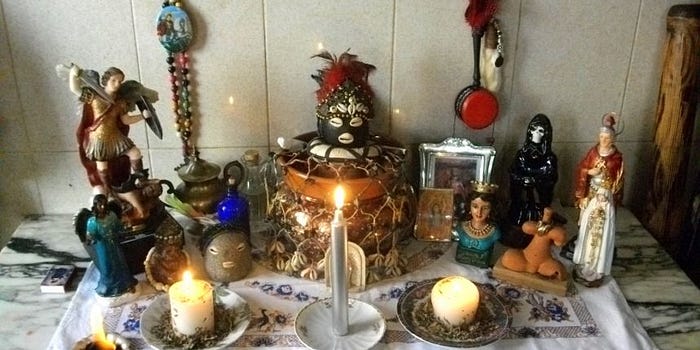
In quantum mechanics’ experiments, the result of whether light becomes a wave or particle depends on the type of measuring device used, and by comparison, in Santería, the appearance of the gods or orishas depends on the type of measuring minds in attendance and the procedures taken to create the fertile ground to attract the orisha, such as the use of certain colors, candles, chants, rhythms, incantations etc., that are particular to the orisha the group wishes to invite.
For example, Erzúlie or Oshún, the goddess of love expects sacrifices of jewelry, perfume, sweet cakes and liqueurs, and is attracted by the colors gold, pink, blue and white. Philbert Armenteros, an Afro-Cuban musician and Santería practitioner believes the music is not enough to attract a deity, that “the full effect is more likely when all the right elements are present in a ceremony” including the aforementioned items, as well as, a spiritual Santería leader or babalawo” (Gage).
Santaría Altar
Even if it’s something from the “fifth dimension” is it a self-contained entity with a life of its own or is it an energy or color or wave or particle that inhabits a collective unconscious outlined by Jung as a second psychic system of a collective, universal, and impersonal nature,” (Jung, Archetypes 43).
The psychic contents or the orishas animating bodies in Santería rituals could be the inherited collective unconscious of the African experience.
During a Cuban bembe, a sacred style of drumming, Joseph Murphy, a scholar and Santería initiate witnessed a possession, “an altered state of consciousness both in the “horse” of the orisha and in the community in the orisha’s presence” (Murphy 165). “One woman in particular is carried by this energy […] Her eyes are closed, and she is whirling and whirling. […] she falls to the ground. {…} Her eyes are open now and gigantic, their focus open to the whole world. Her face is illuminated with an enormous smile, and she moves her shoulders and hips with sensuous confidence. Oshun has arrived” (96).
This woman had mounted the divine goddess, Oshun. She changed her clothes to gold trappings and moved around the crowd possessed with the mannerisms of the erotic goddess, blowing kisses and laughing. Murphy had already gone through weeks of initiation rites before the event and was very much a sympathetic observer and participant. He looked into the woman’s eyes and was “paralyzed.”
Oshun symbol.
Her sacred peacock.
He wrote “this is not a human being before me. It feels as though the drums are inside my head.” Murphy then experienced “strange sensations and deep calm […] and can see every slap of the drummer’s hands.” He was aware but not alarmed about his voice changing and the unfamiliar words he spoke — African words.
It seemed he had channeled the majestic orisha, Shango. Murphy hyperventilated, but his handlers blew in his ear and calmed him (97). He felt this was “the heart of the religion at last, a harmony of the human and divine in dance and joy” and called this “paradise,” but even after all that he stated “the people have brought the orishas out of themselves” (98) an indication that even after his own close encounter with the god, even then he can only be sure that it came from somewhere inside of himself, origins still unknown. The drum rhythms, the chanting and the dancing seem to be “directly conducive to the state of possession, suggesting the possibility of self-hypnosis as a precursor to the trance state (González-Wippler 8).
After the loa (vodoun) (5) or orisha left the body, the return to reality was accompanied with spasms or jerking movements, but in all the cases the return left the possessed with a new clarity. “How clear the world looks in this first total light” (Murphy 261) — “a call to a new reality” (98). This same description could be applied to an encounter with the angels of Christianity or those who are “born again.”
Depth Psychologist Carl Jung was convinced “the collective unconscious is common to all; it is the foundation of what the ancients called the ‘sympathy of all things’” (Jung, Memories 138). If the “fifth dimension” or the abode of the collective unconscious exists, the nature of this dimension, whether it is a shared area of complementarity, the area of pre-material existence in quantum mechanics or a doorway for unexplainable entities to interact with humans remains a mystery. These experiences of possession in African ritual are too ritualized, too similar, not only among their own African religions of origin, but also with many religious experiences around the world.
The African cosmos (and other rituals) may offer a gateway for studies in the new frontiers of metaphysical dimensions with or without the scientific method — hard for me to say since I’ve subscribed to skeptics.com since forever. Regardless, at the very least, the religions of Africa are a powerful tool. A people so abused, so tortured as African slaves survived unimaginable horrors with the help of this powerful, humanitarian tool: a mystical religion.
And so, I am happy to entertain these ideas and experience the joy of being in the company of a powerful, life-enhancing dynamic, especially with a seemingly golden goddess, either real or imaginary.
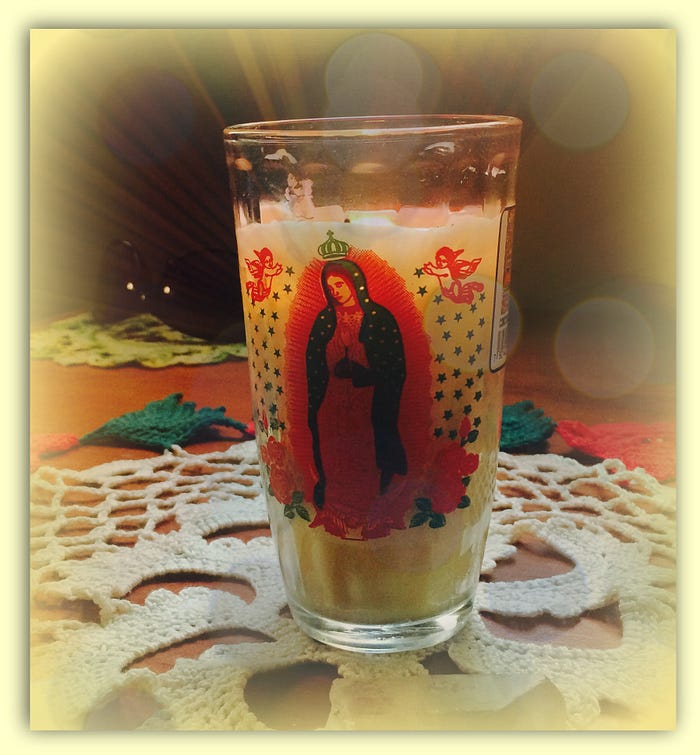
Nuestra Señora de Guadalupe
Notes
(1) In the African Yoruba tradition, there are over 600 orishas or elemental spirits, a complex intricate system of ritual, dance and lifestyle. African religions, of which there are many incarnations on the continent, all share some similarities of a spiritual hierarchy, a monotheistic religion “where secondary divinities, spirits and ancestors provide measured access to sacred power” (Grillo).
(5) Loa is the term for the Haitian deity (Vodoun), which is called an orisha in Santería. Although there may be some cultural differences in names or vevers (sacred symbols), for this discussion of the fifth dimension, loa and orisha are interchangeable. The loa-possessed person transmits energy or even the loa deity to other people with the left hand.
Bibliography
Bourguignon, Erika. “Spirits in Culture, History, and Mind” Journal For The Scientific Study Of Religion 36.3 (1997.
Deren, Maya. Divine Horsemen: The Living Gods of Haiti. NY: McPherson & Co., 2004. Print.
Dyczkowski, Mark. The Doctrine of Vibration: An Analysis of the Doctrines and Practices of Kashmir Shaivism. NY: State U of NYP, 1987. Print.
“Eve.” Encyclopedia of Goddesses and Heroines. Patricia Monaghan. Vol. 1: Africa, Eastern Mediterranean, Asia. Santa Barbara, CA: Greenwood Press, 2010. 85- 86.
Romanyshyn, Robert. The Wounded Researcher: Research with Soul in Mind. New Orleans, LA: Spring Journal, 2007. Print.
Sagan, Carl. The Demon-Haunted World: Science as a Candle in the Dark. NY: Ballantine, 1996. Print.
Shamdasani, Sonu. “Introduction.” C. G. Jung: The Psychology of Kundalini Yoga. ed. Sonu Shamdasani. NJ: Princeton UP, 1996. Print.
Sykes, Bryan. The Seven Daughters of Eve. New York: W. W. Norton & Co., 2001. Print.
Tangaro, Taupouri. Lele Kawa: Fire Rituals of Pele. Honolulu, HI: Kamehameha Press, 2009. Print.
Wells, Spencer. The Journey of Man: A Genetic Odyssey. NJ: Princeton UP, 2002. Print.
(Written in response to Dr. Laura Grillo’s “African and African Diaspora Traditions” Graduate Class Fall 2012 @Pacifica Graduate Institute. Edited for Medium readers.)
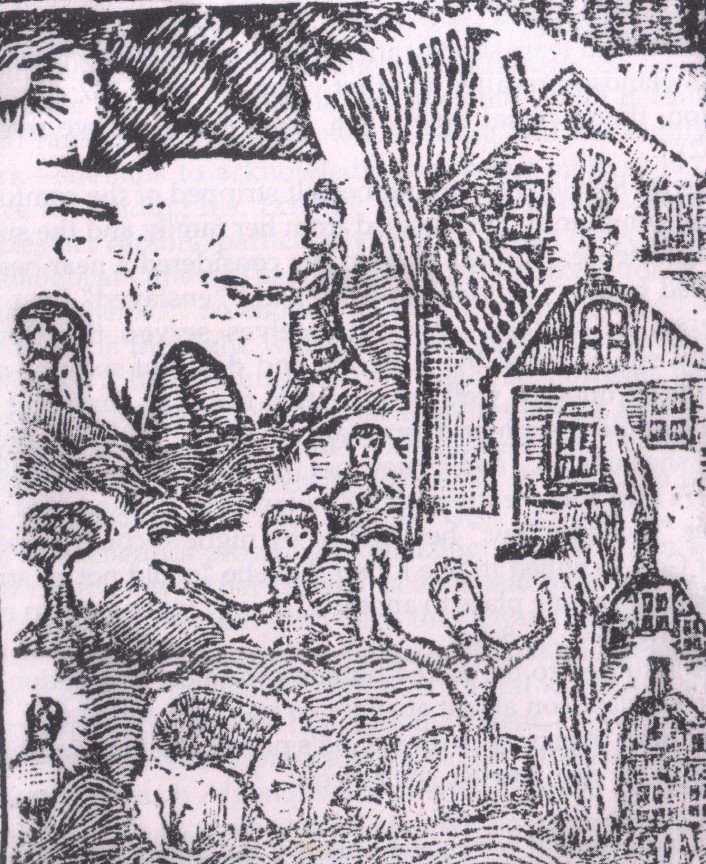
MARY ROWLANDSON was already the captive of a religious cult before the Natives of New England grabbed her during a raid in 1676, she just didn’t know it. (Woodcut of Rowlandson’s kidnapping. Reprinted in Captive Selves, Captivating Others by Pauline Turner Strong
Like Mary, I was born into a similar updated version of this cult—three hundred years later (at least burning/hanging witches stopped, for now).
By the time of her abduction during KING PHILIP’S WAR, the beginning of the real end for the sovereignty of New England’s Native People, Mary had lived her forty years in the religious movement called Puritan, so-called by their peers. Puritans professed to lead a life of purity, a life of pure thoughts, a life dedicated to finishing what the Protestant Reformation had started the century before—eliminate any residual popish rituals in the Church of England. Of course, many Englishmen liked their Church just the way it was.
So, Puritans immigrated to America starting with the Mayflower in 1620 to not only escape persecution, but to build a New Jerusalem in a new, pure environment, free to rule their city-on-a-hill without any pesky King or Archbishops to interfere.
Soon after, their hero, OLIVER CROMWELL, seized power with the help of his New Model Army and lobbed off King Charles’ head, but ten years later, Cromwell was dead, and the throne was restored to Charles’ son. In spite of it all, the Puritans of New England forged ahead, and by this time (1660) they outnumbered their Native neighbors by at least three to one. European diseases had killed many Natives, who some ethnographers think numbered 144,000 in New England circa 1600, shrinking to a mere 15,000 by 1620. Entire villages…gone (Page 174).
Puritans modeled their Churches of Christ (Winthrop 264) after the Christian church of the first century following the death of Jesus (at least their vision of what the church was like), a primitive Christianity based on the letters of the Apostles in the Geneva Bible, the preferred version for the English dissenters.
My Church of Christ is a modified version, but still sticking to their patriarchal, misogynistic attempt at a first century model. Of course, any generality is fraught with danger, but a large block of the Republican Party traditionally votes for candidates that favor dictating moral behavior that melded into that old tune of what came to be called manifest destiny.
After all, God is on their side.
Like me, Mary was born into this cult. Mary’s father, Puritan John White, brought his family to New England in 1638 during the Great Migration, when Mary was three, and had moved through the forest to Lancaster about forty miles from Boston around 1652, which at that time was the “vast and desolate wilderness” (Lincoln 132). Mary experienced life through the Bible-tinted glasses of a New England Puritan, a life that was conditioned from birth to believe only the Saints (Puritans) would inherit the Kingdom of God, if they measured up right.
Puritans constantly searched “for clues to God’s purposes” (Fischer 125), and the Natives were obviously sent by the Devil to test their faith. The Puritan Priest, INCREASE MATHER, wholeheartedly agreed with his predecessor and father-in-law, John Cotton. “The conversion of the Indians is not to be expected […] before the conversion of the Jewish Nation” (Mather 4). Cryptic scriptures were dredged up to justify the wholesale slaughter of innocent Native women and children. “I will bring a sword upon you, that shall avenge the quarrel of the Covenant, Leviticus 26:25” (Mather 1). The Bible was their creed, a malleable text to justify their every edict or law, then as now.
In the course of researching my MAYFLOWER genealogy, I stumbled across THE STORY OF MARY BEING WEETAMOO’S SLAVE. In fact, I don’t remember any American history class I took that talked much about the 17th century. The nice Thanksgiving picture with Indians and Pilgrims getting along would dissolve into the next big event—the American Revolution. Not much happened in between, right? Wrong.
The contrast between Weetamoo and Mary Rowlandson could not have been more stark. Weetamoo was born a beloved Queen in her community. Mary was born a wretched sinner and as a woman, a second-class citizen (Fischer 84). Weetamoo was a warrior, Mary was a homemaker (I’m not suggesting this is bad), and the list continues. In the Puritan world women carried then and now the burden of their sex causing the downfall of the entire human race, thanks to Eve’s dalliance with the snake in the Garden of Eden. This event is still taught as fact. And how about the planet being 6012 years old?What’s wrong with you scholars, can’t you add up all the begets in the Bible’s Old Testament?
I was told to ignore what I learned at school. No dancing, no swimming with the opposite sex, no sex for fun, in fact, don’t even mention the word sex. No musical instruments in church. No asking questions.
Puritans censor a wide-ranging selection of words and artistic endeavors, such as literature, art, film, and skinny-dipping.
Mary was unable to see Weetamoo and Natives, in general, as human beings. The Native propensity for nakedness shocked Puritans. Adam and Eve in Genesis were ashamed of their nakedness. Why not these Natives? Native People were wolves, heathens—wicked creatures of the night. Mary didn’t see Weetamoo’s religion or its rituals. She didn’t see their villages as communities, but rather dens of wolves. The natural environment was not a rich, ancient forest, but a “vast and howling wilderness” (Lincoln 134). Puritans, like many Europeans, believed “unicorns lived in the hills, […] mermaids swam in waters, […] tritons played in Casco Bay,” and of course, witches must be burned (Fischer 125). As late as the 18th century, artistic drawings suggest Europeans in general “still had a hard time actually seeing Indians” (Page Centerfold). (“Drawing of the Savages of Several Nations.” Alexandre de Batz (1735). Reproduced In The Hands of Great Spirit.” Jake Page.)
Mary was eventually ransomed back to her husband and reunited with two of her children. One daughter died during her captivity, but Weetamoo (her children had already died) and what was left of her family died soon after. The Puritans stuck Weetamoo’s head on a pole at Taunton, the site of her ancient homeland. At seeing this head, members of her tribe in the stockade sobbed, “Our Queen…our Queen is dead” (Mather 137).
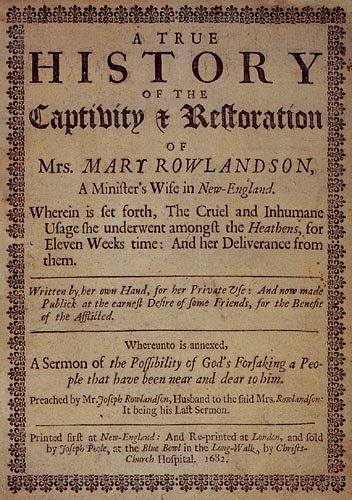
Mary returned to her Puritan life and was encouraged to write her captivity story, most likely by Mather, who may have written the introduction, perhaps in part to stop any nasty rumors of her defilement (read sex) from the hands of any “savages,” a common problem for any woman returning to Puritan communities from captivity (Strong 101), although rape of English women by Native men was an uncommon occurrence. Of course, if Mary willingly had sexual relations with a Native man, she would have been branded or worse.
Conrad “Connie” Reeder was born in Columbus, Ohio. BA Liberal Arts and a MFA in Film, Theater, & Communication Arts with a concentration in Playwriting.
Below is a PDF excerpt to finish my thought on the Youtube video where I got cut off talking about the last time I saw John in the flesh. Sorry, but I don’t own the video and I was grateful to get that much. (Thanks, JoLynn Long!)
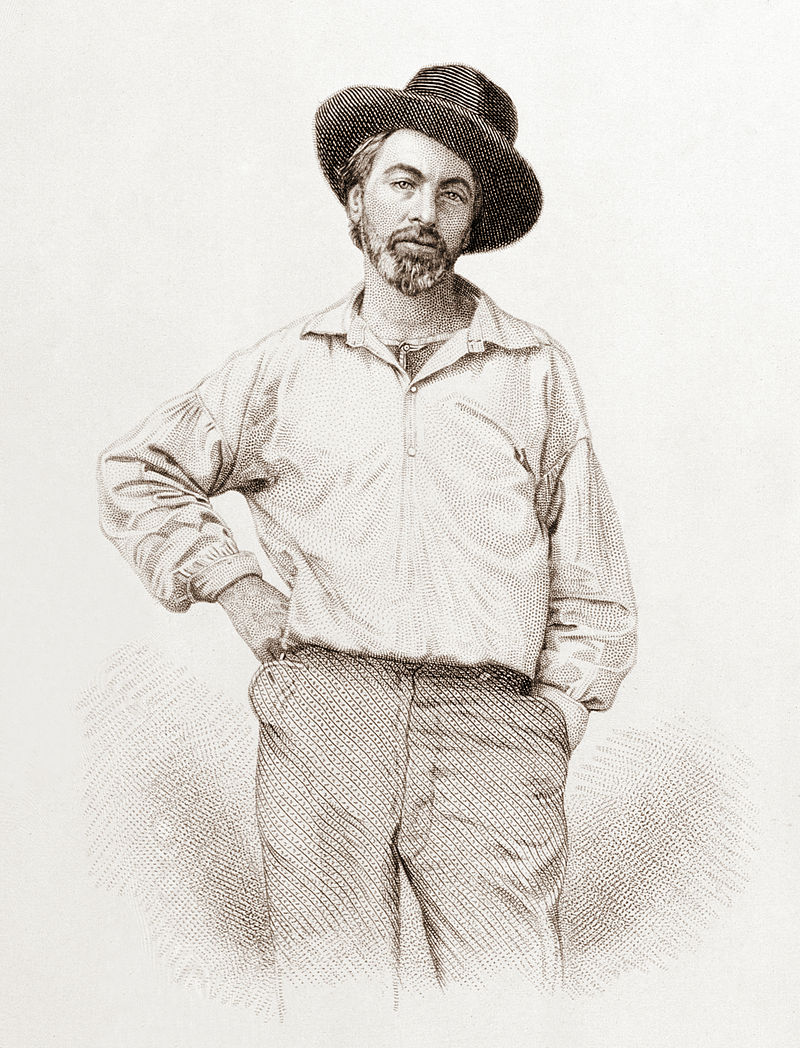
Walt Whitman (1819 – 1892) occupied a lot of my head space in the 90s. I read, re-read Leaves of Grass like I consumed the KJV Bible growing up. He started out as a newspaper reporter in New York, but his passion blossomed into a free-style poetry, so new in the time of strict Victorian verses, a new style—a free wheelin’ man just like his ramblin’ man picture on the cover.
No stuffed shirt here. And rolling with the Transcendentalist movement in the air around him, he boldly wrote a “Song of Myself”. His line, “The quadroon girl is sold at the auction-stand”, sailed me into another direction.
So, I added a poem to this Chapter. Nikki Giovanni is a woman of color and I think she fits in this Chapter.
Unfortunately, even though her poem was written years ago, it is, as it is in our culture at the moment, more or less.
Feel free to comment on Nikki’s poem or any other in Chapter 2 in the comment section below.
Allowables
By: Nikki Giovanni
I killed a spider
Not a murderous brown recluse
Nor even a black widow
And if the truth were told this
Was only a small
Sort of papery spider
Who should have run
When I picked up the book
But she didn’t
And she scared me
And I smashed her
I don’t think
I’m allowed
To kill something
Because I am
Frightened
Yolande Cornelia “Nikki” Giovanni Jr.[1][2] (born June 7, 1943) is an American poet, writer, commentator, activist, and educator. One of the world’s most well-known African-American poets, her work includes poetry anthologies, poetry recordings, and nonfiction essays, and covers topics ranging from race and social issues to children’s literature. She has won numerous awards, including the Langston Hughes Medal and the NAACP Image Award. She has been nominated for a Grammy Award for her poetry album, The Nikki Giovanni Poetry Collection.
Connie, Ashlee. Roger and Cimcie at his Lifetime Achievement Award from the Florida Chapter in 2006.
When I picked up Roger’s iPhone, after his last breath, a long time passed before I remembered to breathe. I froze. Some people do feint at the sight of death; maybe they forget to breathe? I was amazed that I could breathe. But why was I breathing and not him? Why did Roger, who exercised and didn’t smoke or abuse drugs/alcohol get this horrible Pancreatic Cancer?
Malibu, 1979
When distant gods and empty creeds offer no respite and no answers to this “why” issue, what’s a sensitive soul like me to do? Somehow, the pain and inner voices are guiding me to write Memory Clouds, especially for myself, but maybe reach out to others struggling with grief and lingering “why” questions. After all, misery loves company. But something or someone? won’t let me die with Roger, no matter how much I wish to on some days.
Most days, I still find myself frozen in shock, really fear. I lost someone I’d shared most of my life with–over 33 years of the good and the not-so-good, but it was ALL OURS—our children, our animals, our home, our dates, our triumphs, our tragedies. How the hell can I go on without him to face the money problems, the unfinished projects we’d both worked hard on, and just when it seemed the financial stability that our efforts over decades so richly deserved had finally started–the new coveted steady jobs, why, oh why did he have to die now?
Intellectually, I knew it would never be a good time for him to die, but where was my head? All I knew was a broken heart. Everything was gone: my lover; my friend; my confidant; all the life I knew. Even our old dog, Spookie, chose to die three days after Roger. Cowards! Get back here and help me! Who was going to pick up the dead bird in the yard or fix the garbage disposal or hold my hand while we watch the sunset or walk our daughters down the aisle at their weddings or go with me to the doctor or not care that I needed to lose 30 pounds? Each new minute in this new reality after Roger died still delivers different, shocking fears.
When I finally got some counseling, after I thawed out a bit, Ginette Paris, a wise woman with a PhD in Psychology and a twinkly eye, suggested that I not ask “why.” Not only is this asking “why” not helpful, but also by asking the unanswerable “why”, we get stuck in a destructive loop of always asking “why”? It seems that this “why” remains elusive for many things in life like sickness, greed, war or death. But “why” I ask. I’m stubborn that way.
In scanning our limitless Universe, all I know for certain is there will always be more questions for the inquisitive mind. Answering one question will just open up the door to another one. Ask “why” but don’t expect any definitive answers. Why birth? Why do we breathe air? What I do know is this: if you’ve been something to somebody (s)he will grieve when you die. Grieve, I do. This part of life is bad, bad, bad grief, being the one left behind—the fear immobilizing.
In some circumstances fear would be a good thing, if I was a zebra on the Serengeti running from lions. But when the lions leave, zebras totally relax. Not so with humans. We carry our angst on the tip of our tongues, buried inside our bodies like a steaming hot mess ready to boil over at the least provocation. At some tipping point, too much fear, too much grief and your body shuts down. Mine did. I just felt numb. I couldn’t move.
Will I survive this? How does anyone? Can I stop asking “why” questions? Time will tell. No matter how it happens: divorce, abandonment or death, it’s loss beyond words. But, grief is not a choice.
*Update: I wrote this 23 June 2012, the day I started writing Memory Clouds: Good Grief Bad Grief and as of 27 Nov 2018 I am grateful to be alive and enjoying my life in this next chapter ;).”





























 Cowards! Get back here and help me! Who was going to pick up the dead bird in the yard or fix the garbage disposal or hold my hand while we watch the sunset or walk our daughters down the aisle at their weddings or go with me to the doctor or not care that I needed to lose 30 pounds? Each new minute in this new reality after Roger died still delivers different, shocking fears.
 Conrad Reeder