All posts by Conrad Reeder

Unknown's avatar

About Conrad Reeder

B.A., M.F.A. Film, Theater & Communication Arts. Creative Writing: Playwriting. Lecturer at the University of Hawaii. Adjunct Faculty at Palm Beach State College. Currently working on a Ph. D. in Mythological Studies with Depth Psychology at Pacifica Graduate Institute. https://www.facebook.com/Graffititheplay :: Graffiti, a new play about Goldie and Alice, neighbors who live in a trailer park in Holiday, Florida, and fight about Junior, the grandson Goldie raised. Junior is now a man, and Alice has noticed.

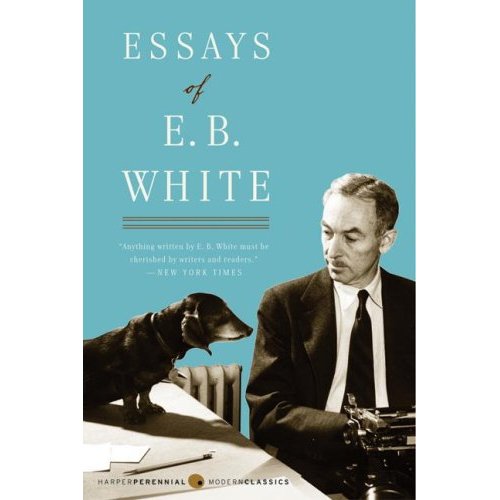
Death of a Pig

1 thing leads 2 another. At 1st, I was turned off by E. B. White’s title, Death of a Pig, & was determined not to read it. Sometimes I can’t take much gore. But, I couldn’t help myself, I read White’s story.

charlottes-web

I thought it was going to be about slaughtering a pig, but instead, it was about caring for a pig that White was going to slaughter, but ended up not, because the pig got sick & died. Poor pig. White agreed.

And then White said,  “I noticed that although he weighed far less than the pig, he was harder to drag, being possessed of that vital spark.” whitedachshund1So much is in this one thought. White’s talking about his irascible ten-pound Dachshund, a mini might, who he had to haul away from the hundred pound pig’s grave. Life is vital & willful.

I can only dream to write with such humble force. White led me to Montaigne’s The Essayist. I’m not that familiar with Montaigne, but somehow White led me to him. Montaigne is writing over 400
 years ago in a style that I can now see informed many writers I love…candide1

Voltaire being one.

Montaigne’s warning in On Books gives me pause: “Mistakes often escape our eyes, but it is the sign of a poor judgment if we are unable to see them when shown to us by another.” I struggle daily to find my own voice in word or song, & lines like that drive me crazy.

Shouldn’t it matter who is pointing out your mistakes? Am I even seeing all the criticism lobbed my way? Do I ever question the critic? What is a mistake? Turning right on red when the sign says, “Don’t turn on red” is a mistake. Using sentence fragments & calling it poetry, or numbers for letters as a techie innovation that seems to be leading us back to hieroglyphics, might be called a mistake by writers who stick to so-called rules, but is it?

Is having an abortion a mistake or poor judgment, or a logical choice on a planet where thousands of unwanted children die every day? I guess, Montaigne was speaking in the woo-woo Land of the Hypothetical. In Montaigne’s The Commerce of Books I found this jewel: “In books I only look for the pleasure of honest entertainment: or if I study, the only learning I look for is that which tells me how to know myself, and teaches me how to die well and to live well.”

That takes the pressure off—just read what entertains me. I never really cared about learning useless facts that add no pleasure to my life, anyway, such as there are more pigs than humans in Denmark, almost 5:1. pigs1Learning that 5.4 million Danes are subjected to the smelly poo of 25 million pigs informs me of nothing about myself or offers any clues as to how I should live or die. Most likely in this, Montaigne & White would agree.

Some days, I wish I could be White’s beloved pig instead of a worrisome middle-aged writer on the verge of something or another.

Oh to be immortalized in print by such an excellent wordsmith. The pig didn’t worry about deadlines or paying bills…or analyzing personal & professional mistakes. He did suffer a couple days at the end, but he didn’t go through the indignity of being eaten. Yes,  he was dead & who cares, but how do we know?

No swell way to die/ this flesh-eating frenzy/ whether pig, man, or writer.

Dead or alive, I fear I will always feel every rejection letter, every no thanks, & no way—another bit of flesh off the bone. And who has time to learn how to die well? Living occupies my every waking moment.

conpigcrop_12Other days, I’m not so worrisome (like today), & chow down on a ham & cheese—honey ham for me.  After all, there is no such thing as swine flu–it’s really the H1N1 virus.

I tug & pull at my leash, a regular feisty Dachshund. Let’s go this way!

Like White says, once you’ve given a pig an enema, there’s no turning back. Strip away all the trappings & just rite [sic].

DO WE CARRY POCKETBOOKS IN THE NEW WORLD ORDER?

obamasqueen2

Hellooo! I’m tired of doom and gloom. What I want to know is will we still have pocketbooks in the New World Order, and will they be called pocketbooks? Pocketbook is what my mother called hers. As an English descendant of Mayflower ancestry, my mother harbored English ways albeit filtered down through 300 years of ancestry in the New Colonies, calling strangers “mum” and never going anywhere without her “pocketbook,” just like the Queen. And we ate lots of peas….

The New World Order is off to a bloody good start. Apparently, the Queen thoroughly enjoyed her visit with the Obamas. Royal-watchers took careful note of the positioning of the Queen’s purse. “It’s always with her, and, when pointed at certain angles, it’s said to signal to her attendants that she can’t wait to escape from the frightful bores in her company. The purse rested in the crook of the Queen’s left arm, which means that she’s happy and relaxed with her guests.”

Michelle Obama notably lacks a pocketbook of any size or shape. Our excellent First Lady must signal her minions with her long eye lashes and since she towers over all in the room, I feel sure they will catch her signal.

Does this mean the future will be pocketbook free? Maybe. But if the formidable Queen has her way, the pocketbook will survive the New World Order. The Queen knows. Women will always need their signals, and their lipstick and their powder and their iPods. And that’s the good news.

Lift the Travel Ban To Cuba

Big news! We now have legislation in the House of Representatives calling for an end to the travel ban on Cuba for all Americans. “Travel for All” instead of “Travel for None” or even “Travel for Some.” Take action now: ask your representative to co-sponsor H.R. 874. The purpose of H.R. 874 is “To allow travel between the United States and Cuba” – but the most important thing to remember about it is that it will allow travel for all Americans, no exclusions.  It was introduced by Representatives Bill Delahunt (D-MA) and Jeff Flake (R-AZ), along with a short list of original co-sponsors. See the list of co-sponsors below.

Email your representative today.

Capitol Switchboard number: (202) 224-3121 or find your representative’s number on their website.

The message: Please co-sponsor H.R. 874, the Delahunt-Flake bill “To allow travel between the United States and Cuba.”

This bill introduced by Rep. Delahunt (D-MA) and Rep. Flake (R-AZ) calls for lifting travel restrictions to Cuba for ALL Americans, restoring our right as citizens of the United States to travel freely, and takes a giant step toward restoring our country’s reputation in Latin America and the world.

[If they ask . . . ] The current co-sponsors are:

Rep. Delahunt, Bill [MA-10]
Rep. Flake, Jeff [AZ-6]
Rep DeLauro, Rosa L. [CT-3] – 2/4/2009
Rep Edwards, Donna F. [MD-4] – 2/4/2009
Rep Emerson, Jo Ann [MO-8] – 2/4/2009
Rep Farr, Sam [CA-17] – 2/4/2009
Rep McGovern, James P. [MA-3] – 2/4/2009
Rep Moran, Jerry [KS-1] – 2/4/2009
Rep Paul, Ron [TX-14] – 2/4/2009

Thank you for your support in ending this inhumane and out-dated travel ban. To co-sponsor H.R. 874 please contact either Cliff Stammerman in Rep. Delahunt’s office or Chandler Morse in Rep. Flake’s office.

MY QUORUM WITH WAR

Before there were blogs, there were journals. People actually wrote words on paper. I’m not a pundit on camera, so I rely on my friends’ memory to back up my own sometimes, and I was shocked when one didn’t remember me speaking out against the Iraq war. I have a vivid memory of singing war protest songs against The Iraq War: Number One with my band, Fugitive Blonde, at the China Club in Los Angeles, and I have a fixed memory of loathing the current decision to bomb Iraq from day one, but where is the proof?

Things have been fuzzy since 9-11 around my house, what with the business crashing, and the downsizing, and the graduate writing courses, and one crisis after another. Since I’ve had no public platform to speak from of late, the only documentation of what I’ve said is from reliable witnesses and my journal.

These may just be words swirling around in the blog-o-sphere and who cares anyway. But at least I can read my typing. And as long as the internet keeps going, and I can hang on to my computer memory sticks, my computer, printer, and ink, everything will be swell.

My handwriting is not much above scribble these days, but I did scratch out a few thoughts about The Iraq War: Number Two to myself, and luckily the journal survived a move and my I-Love-Lucy filing system. There is no search button to find things in my closet.

As I recall, if one spoke out against either Iraq war, one was labeled a traitor or aiding terrorism. Obama’s stance on the war in Iraq was one of the big reasons I voted for him. Yes, even the appearance of change feels good.

Exhibit A:

The funny thing is I did go to Mérida four years later–Mérida, Spain. Life gets weird sometimes.

THE LINES OF THAT ONE

The ghost line flickers in the new dawn.
The blue-tipped flame melts
the wax edge, and the goo of myself
oozes into a pool of a dream
that one, like me can

dream of that one cooling the heat
of blood boiling in my veins of cooked sorrow,
healing seared love burned by arteries of hate.
The lines are long. The lines snake
around the y + x. The spiral crow
flies through airwaves of primordial mud,
spitting, sputtering, spewing, birthing
lines and lines of descent, ions in the making.

I dream of genes flowing from body to body;
nights of kisses, nights of release,
nights of smelly, smouldering sex.
The apple in the eye of
millions of fathers and millions of mothers
survives eyes of storms, shifting
sands, whirlwind seas, epic ghost stories

that one after another all suffer, bleed, orgasm,
die one after another. The lines do not
end. The lines eat and grow and
travel across seas, over mountains
dodging bullets, and germs and rabid
ideas that consume energy, resources,
and good news. That one ghostly
sense of lively purpose lingers, thrives.

Myself, I live in the snake-eee line of descent.
Righteous Mumbo and Holy Jumbo
now back where they belong, next to
that one singular thought: We,
and the ghosts who live

are that one, the one
and the same,
and only one.

Amen.*

* In Homage to Barack H. Obama & His Family. Pictured with Barack is his maternal Grandparents, Stanley & Madelyn Dunham.

MARIANNE MOORE’S ROMANCE WITH THE DAO PART 2

IN A CALIFORNIA SPEECH titled, “Tedium and Integrity,” Moore discusses Sze’s two books, The Tao of Painting and The Mustard Seed Garden Manual of Painting.

One of her major points is that “painting is not a profession, but an extension of the art of living” (qtd. in Qian 226). For Moore, who viewed her poetry as her canvas, the word “painting” and “poetry” are interchangeable. Moore reverently extols Mai-Mai Sze, the artist/translator of the two ancient texts, as being “an angel to me and friend of the dragon-symbol” (Qian 181). For Moore, “the manual is to me a world of romance – the romance of words” (qtd. in Stamy 157).

Moore embarked on a lifelong love affair with words that “cluster like chromosomes” (Stamy 44). The Dao infused Chinese art was a catalyst for Moore’s inquisitive imagination, and in investigating the nature of this art she found, “A Chinese ‘understands/ the spirit of the wilderness’/and the nectarine-loving kylin” (CP 30). Being an inquisitive person with the formal training of a biologist, her investigation into why this art seemed to “breathe” life led her straight to it’s source, the philosophy of the Dao, the spiritual resource that fuels much of Chinese and Japanese art, especially that which portrays Nature-related themes.

Chan Buddhist or Zen painting technique is relentless in detail. “Each detail has its reason” (Sze 536). In Dao teaching, the student-artist is taught not only that “birds with long tails should be drawn with short beaks,” but also equally important is for the artist to know, “they sing beautifully and fly high” (ibid). Only if the details are drawn in this way (a communion with Nature from direct observation) will the results be lasting.

Modernist leaning writers like Moore, who searched for meaning, not only to survive, but to live a life of inspired imagination, found passion and joy in this thinking. Knowledge of the material sort is the direct result of a science that utilizes close observation, but Western science does not even try to answer that forever question; why are we here? Dao gave artists then and now a path to experience peace and explore that question in a useful, productive way, a way that creates breathable art, a pictorial representation of this invisible relationship between consciousness and flesh.

Moore found the Chinese recognition of how the individual should function in perfect harmony with landscape and animals defensible and “illuminating” (Qian 174). Moore treated Nature with respect in her poems about the jerboa, the basilisk, the jelly-fish, the elephant, and so forth. She does not embrace the Judeo-Christian idea of “man’s dominion over Nature” found canonized in the book of Genesis. As anyone knows who has lived in an urban environment, the city has toxic affects on the human body. Moore lived most of her life in urban New York. This parallel reality she lived in through her study of Chinese Nature artifacts, and in her poetry by analyzing it, kept Nature near and alive in her thoughts. Her relative good health and longevity is a testament to the healing power of this approach.

Moore, like everyone, needed help in dealing with her own struggles, and she found acceptance in society from her wit of words at an early age. “So I smile, (as if I had found a penny) when people tell me how they like them (poems) and talk about writing poetry and so on as if it were gymnastics or piano practice” (SL 63). Her invisible Father’s shadow and her station in life was ever present. Moore worked hard lest anyone doubt she was a woman of integrity. She would never lose her balance, such as her Father had.

In fact, she had dismissed her Father’s chromosome that made her female, and consistently referred to herself as male, and gave herself (and was given) a male pronoun in correspondence with her brother and mother (SL 4). Moore maintained her internal consistency. At a discussion at a Bryn Mawr Friends Meeting, Friend being the other name for Quaker, the discussion turned to “Progress and Women.” Moore made a point of saying, and then writing it down to her mother and brother, “we (women) are provoked with people for calling us unprogressive when often we fall short ourselves and fail in realizing our individual (her italics) ideals and just stop – comfortable – inventing all manner of excuses for our faint-heartedness and laziness” (SL 30).

Moore would later find solace in Sze’s canon regarding Chinese art to allay any “faint-heartedness,” a canon replete with tangible artifacts created by artists who displayed what Moore called “integrity,” a display of internal consistency, or a quality of being honest and using strong moral principals. In this Way of Daoism, she found a corroboration for dismissing the ego. In her “Tedium and Integrity” speech, Moore feels “very strongly what Juan Ramon Jiménez said in referring to something else – to what is not poetry – ‘there is a profounder profundity’ than obsession with the self” (qtd. in Qian 226). To give up egotism, which Moore renamed, “tedium,” what the “Buddhists call ignorance” (Qian 173), was not a problem for Moore, especially if it kept her from coming near the “ragged brink” (SL 63). She had consistently removed her self, her narrative, from her poems, a hallmark of Modernism. Skipping past her immediate heritage, Moore aligned herself with a sturdier, more reliable anchor, the “tao of the ancients” (Qian 177).

Born several generations before the confessional poetry of Plath, Hughes, Lowell, and others came into vogue, (Pictured Moore & Plath 1955) Moore didn’t indulge her readers with any details of her sexual relationships, nor did any potential partner of hers come forward (I doubt she had any, unless her niece, the executor of her estate, has information she’s not sharing). Linda Leavell has put forward a theory of an early crush on Peggy James (William James’ daughter), but without proof of a consummated relationship, it is mere speculation. Human nature being what it is, rumors swirl, and theories abound. Was she molested? Did she have an encounter that horrified her to celibacy? Moore’s mother wrote of her daughter’s “grim ‘sternness” and “Monk-like severity” (SL 118) Was she a lesbian? Moore supported the Woman’s Suffrage movement, but deferred to her brother’s wishes not to march in public and avoid “such public display” (SL 77). However much Moore wished to step out of her skin, the social and emotional restraints remained boundaries.

Not being Chinese, she didn’t carry the emotional baggage of Eastern misogyny. Was it only a coincidence that an intellectual like Mai-mai Sze, the Chinese artist who Moore described as an “angel,” had chosen her own alternative lifestyle, by choosing a lesbian relationship? Many of Moore’s intimates were homosexuals, such as Bryher and fellow imagist, H.D.; two of her biggest champions and editors of her first book, Poems.

(Bryher in Picture circa 1938)

There is some evidence that her mother, who never remarried after her separation from her husband before Moore was born, had an affair with the family friend, Mary Norcross. Yet, Moore gave no clues regarding her love life, and resisted the entire “homo/heterosexual binary itself” (Leavell). Moore seems to have found romance in the act of writing her poetry, a poetry infused with romance: romance with the Dao.

Next Week: Marianne Moore’s Romance with the Dao Part 3

See Part 1 for Works Cited Page.

Winnifred Bryher in Picture circa 1938

MARIANNE MOORE’S ROMANCE WITH THE DAO

I’VE ALWAYS ADMIRED THE TENACITY and word-skills of the poet Marianne Moore (1887 – 1972). Grouped into the Modernist Movement with Pound, Williams, Stein, Stevens, T.S. Eliot and others, Moore carefully sculpted a life by nurturing a razor sharp wit. She also found a balance for her sensibilities about relationships, and crafted ideas of how she wanted to present and even propagate her “insight and sympathetic ways” (Moore, SL 35) to the world at large. She worked hard at her writing, producing over 30,000 letters, which doesn’t include her articles and poems extant. At the age of twenty she came to the conclusion, “I want to write,” and “shortly I will have something to say” (SL 40). In part, Moore found sustenance for her balanced wit, and much of her “insight” in the aesthetic of The Dao.

The Dao, also called The Tao, The Way, The Path, or Zen (in Japan), encourages the artist to develop a “wide and keen observation, eventually to find in enrichment of the spirit, the secret of the rhythm of nature” (Sze 18). This was a perfect marriage for Moore’s burgeoning sensitivities that grew out of her early desire to “scrape sparks from the ground, from the mere excess of animal spirits” (SL 39). The Dao offered another framework, not necessarily to replace, but to enhance her American/Western tradition.

Born into a society where women didn’t vote, or legally own their own bodies
, Moore reached out to the Eastern tradition to feed her meditative spirit. Like the virgin Queen, Moore remained single, yet celibate—married to her art.
Moore & Mother: Zorach Painting 1919

Her mother was her mate for life (Leavell).

Moore sensed in China, “a cultural superiority to Europe itself,” and justified this as many Westerners did, and still do, “because of China’s historical longevity” (Stamy 5). Like her predecessor, Emerson, Moore moved the “struggle for American definition to another and, for her, a superior site” (Stamy 5). At Bryn Mawr, a Quaker school, Moore was encouraged to meditate on her inner light and the beauty of God’s creation: Nature. These sensibilities did not discourage Moore from investigating likewise philosophies.

Some of her early successes as a writer were a direct result of her investigations into Chinese artifacts. One of her early poems published in her book, Poems (The Egoist Press 1921), was about a Chinese scroll or screen (Willis). As Professor Zhaoming Qian explained in a graduate lecture for a Modernist Workshop at the University of New Orleans, early Moore used “Chinese motifs on the surface level,” and later Moore treated “Western motifs with Chinese perspectives.”

In “He Made This Screen,” Moore experimented with her imagist ekphrasis. In lieu of a narrative, she described a piece of art. It’s as if she were circling the dragon, trying to free her style of writing. Her Modernist leanings were apparent—the image is the thing, but she fell back on meter and rhyme.

“Nine Dragons” Chen Rong 1244 Boston Museum of Modern Art

He Made This Screen

not of silver nor of coral,
but of weather beaten laurel.

Here, he introduced a sea
uniform like tapestry;

here, a fig-tree; there, a face;
there, a dragon circling space —

designating here, a bower;
there, a pointed passion-flower.

In her poem written almost forty years later, “O To Be A Dragon” (CP 177), Moore was still circling the space, but had switched gears. Moore wanted to not just circle, but become the Modernist Dao Dragon, which for her was the “symbol of the power of heaven.” She wanted to become one with the space now enlarged to the “totality of heaven and earth” (Qian 182).

The Dao invigorated Moore’s mind throughout her life. In her late 60s, after receiving her book set of The Tao of Painting and The Mustard Seed Garden Manual of Painting, ancient texts by Chieh Tzu Yuan Hua Chuan, and translated by Mai-Mai Sze, Moore wrote to the publisher, John Barrett, “You cannot imagine my excitement in possessing these books […] it “is pleasure enough for a lifetime” (qtd. in Qian 168).

(Sze 320) Her romance goes further into the realm of passion in describing how she “passionately admires […] – an insect-and-frog picture,” even suggesting that if she were in a mental decline, “Volume I of the Tao would, I think, help me to regain tone” (qtd. in Qian 169).

Not an idle statement for someone who never met her father because he was institutionalized for a “nervous breakdown” before she was born (SL 3). Moore identified a space in which she could live and create, but most importantly, feel good about life, as if the Dao kept her sane.

Always a good thing in troubled times: Sanity.

Next week. Marianne Moore’s Romance With The Dao Part 2

Works Cited

Leavell, Linda. Marianne Moore, the James Family and the Politics of Celibacy.
     Twentieth Century Literature. vol 49: 2. Hofstra U, 2003. 219.
     http://www.questia.com/ 10 Oct 2008

Moore, Marianne. Complete Poems. New York: Penguin Books, 1994.

—. Marianne Moore: Selected Letters. Bonnie Costello (ed) New York: Penguin Books, 1997.

Pollak, Vivian. Moore, Plath, Hughes, and “The Literary Life. American Literary
     History 17.1. USA: Oxford UP, 2005.      http://muse.jhu.edu.ezproxy.uno.edu/journals/american_literary_history/v017/17.1pollak.html   18 Nov 2006.

Qian, Zhaoming. The Modernist Response to Chinese Art: Pound, Moore, Stephens.
     USA, U of Virginia P, 2003.

Stamy, Cynthia. Marianne Moore and China. USA: Oxford UP, 1999.

Sze, Mai-mai. trans. The Mustard Seed Garden Manual of Painting. Chieh Tzu Yuan
     Hua Chuan, 1679-1701. New York: Princeton Univ. P, 1977.

White, Heather. Moral, Manners, and Marriage: Marianne’s Art of Conversation.
      Twentieth Century Literature. Hofstra U, 1999.        http://www.findarticles.com/p/articles/mi_m0403/is_4_45/ai_61297799 10 Oct 2008

Willis, Patricia C. (curator) Beinecke Rare Book & Manuscript Library, Yale University,
     1997 http://www.library.yale.edu/beinecke/orient/mod10.htm 10 Oct 2008.

Picture of Moore with Book: 1995 Grolier Multimedia Encyclopedia

GODDESSES, WHORES, WIVES, & SLAVES: The Archetypal Roles Assigned to Women in Theatre. Part 2: Women Write Plays, Too!


Euripides’ Medea (431 B.C.E.) does not go gently into the night, and some of her lines are the first uttered on a public stage in the defense of women.

Then they also say that whilst we live quietly and without any danger at home, the men go off to war. Wrong! One birth alone is worse than three times in the battlefield behind a shield (lines, 248-49).


The only notorious female writer of this ancient time in any genre is Sappho born about 612 B.C.E. and all that remains of her work is a single poem and fragments of others. In antiquity, Sappho was commonly regarded as one of the greatest lyric poets. An epigram in the Anthologia Palatina (9,506) ascribed to Plato says, “Some say the Muses are nine: how careless! / Look, there’s Sappho too, from Lesbos, the tenth” (Campbell, D.A.)


Sappho’s alleged bi-sexuality alluded to in the few remaining fragments of her poetry offended people throughout history; her books burned by Christians in the year 380 C.E. at the instigation of Pope Gregory Nazianzen. Another book burning in the year 1073 C.E. by Pope Gregory VII may have wiped out any remaining trace of Sappho’s works (duBois).

It’s been a slow crawl from a woman’s pen to the page to the public stage. Virtually no female playwright appeared in the West until the 10th century C.E. German Benedictine nun known as Roswitha or Hrotsvit von Ganderwhelm (Case 533). Roswitha penned six plays that are extant, following the form of the lax moral comedic plays by the 2nd century C.E. Roman playwright, Terence, albeit framed with a stiff moral Catholic slant.

But the first woman to make a living as a popular dramatist in the West, and the first female playwright covered in this essay (and an undergraduate course I designed as part of my Masters Degree Thesis) is Aphra Behn (1640 – 1689), who wrote during the period of the English Restoration Theatre (1610-1710). Denounced by the American literary critic, Harold Bloom, as a fourth-rate playwright, Behn was nonetheless hailed by Virginia Woolf in A Room of One’s Own.

All women together, ought to let flowers fall upon the grave of Aphra Behn… for it was she who earned them the right to speak their minds.

Woolf believed Behn’s total career to be more important than any particular work produced. However, Behn’s work still gets staged. At a recent performance (2003) of The Rover in Oakland, the reviewer called Behn’s role reversal scheme “spirited and saucy” (Jones).

Behn, a former spy for Charles II, might have settled the argument with the first line from the Prologue of The Rover:

Wits, like Physicians, never can agree, / When of a different Society.

From this point forward, women slowly made inroads into the male-dominated theatre. After the Puritan shut down of theatres in London for a decade, the atmosphere in London at the reopening of the theatres after the Restoration (1660) was festive, and women appearing on the legitimate stage for the first time was not (I believe) coincidental with Behn’s debut as the first professional English female dramatist.

Women seized the moment: Hannah Cowley, Susannah Rowson, Susan Glaspell (Pulitzer Winner), Sophie Treadwell, Lillian Hellman, Gertrude Stein, Wendy Wasserstein (Pulitzer Winner), Caryl Churchill, Ntozake Shange, Marsha Norman, Emily Mann, Margaret Edson, Alice Childress, Adrienne Kennedy, Megan Terry, Theresa Rebeck, Beth Henley(Pulitzer Winner), Sarah Kane, Caridad Svitch, Lorraine Hansberry, Maria Irene Fornés, Marsha Norman (Pulitzer Winner), Wakako Yamauchi, Spiderwoman Theatre (Native American), and many more have all contributed to the growth of Western theatre since Behn broke the all-male rule.

Another radical playwright vilified and adored in her own time was Mae West (1892-1980).

Middle and upper class white women generally dominated the women’s movement, one that would have certainly disapproved of Mae (Watts 106).

Exclusion of West’s plays from Murphy’s Cambridge anthology about women playwrights has much to do with critical readings of her plays, but I would argue that who or what she represented to the general public—-an independent, sensual woman who maintained a Goddess Archetype in spite of her Whore behavior, seized the same sexual freedom for women as men had always enjoyed. This was an unconventional Archetype for mortal women, as ground-breaking in society at large as the right to vote was empowering.

These days the discussion of West’s first hit play titled, Sex, (which has no sex in it) should be an enlightening experience for young people in the twenty-first century who have been sexually saturated by society and the media.

(West & Cast of her Broadway show, Sex (1926)

The Westian use of double and triple entendre to convey sexual images is a refreshing study in form and dialogue. No playwright before West had ever done this.

“attacked respectable women from the stage… of being whore(s) in disguise” (Schlissel 9).

West also opened the closet for the gays of New York City with her play, The Drag, which earned her jail time for her effort. In 1927, gays were the victims of viscous beatings by the New York City police. West was a major force behind legitimizing the gay subculture (Schlissel 11). Examining why West’s female brand of Archetype dominated the British/American stage and Hollywood movies for decades and during a depression era has merit in any study of plays by and about women. By designing her own unique Whore/Goddess that rejected male domination, West, a working class woman, offered “an early feminist role model” (Watts 107) whether certain feminists like it or not.

And then there is Suzan-Lori Parks.
Her play Venus exposed the vicious true story of the evil treatment of Saartjie Baartman, an African woman who was displayed in Europe (1789-1815) as a freak show because of her unusual buttocks.


This Hottentot Venus is a Goddess/Virgin defiled and reassigned the role of Slave, and then Whore. The slavic safety of domesticity is not an option for this woman. Parks satirizes the insanity of it all by using a Greek Chorus, a harkening back to a time when women were banned from theatre, just as Baartman is banned from life.

Parks is the Goddess Archetype in her own life drama–the story of the first African American woman to win the Pulitzer Prize for Drama (2002) with her play, Topdog/Underdog; a play with only two characters—two male characters.

The boundaries of sex no longer apply. Women playwrights have joined their Archetypes center stage.


(Piccolo Spoleto theatre production of Topdog/Underdog, Charleston, S.C. 2006. Pic & article found here.

*Nancy Novak as Medea in Jason and the Argonauts (1963)

Works Referred To: Go to Part 1 of this essay.

Note: This essay is the introduction to an undergraduate class in Theatre History.